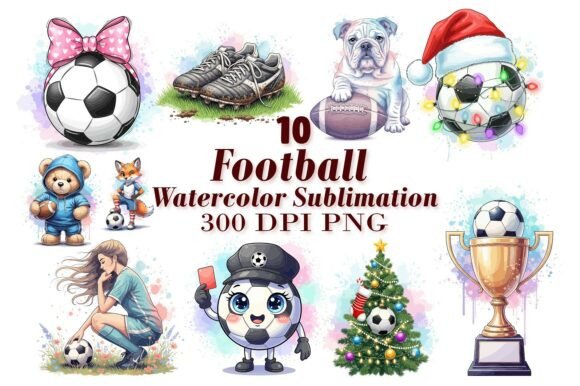
Cute Football Watercolor Sublimation Review
As a designer who spends more time staring at stitch density charts and fabric swatches than watching actual games, I approach every new digital asset with a healthy dose of skepticism. The market is flooded with generic sports motifs, but Cute Football Watercolor Sublimation caught my eye not because of the subject matter, but because of its execution. For those of us in the handmade product space—whether we are running an Etsy shop, decorating custom apparel for local teams, or crafting personalized gifts—the visual language of a design often dictates its commercial viability. This piece sits right at that intersection: it is playful enough for a nursery, yet structured enough to hold up as a professional embroidery project.
First Impressions: Mood and Visual Personality
The moment you load this file into your digitizing software, the watercolor aesthetic stands out. Unlike rigid vector shapes that can sometimes feel cold or overly geometric on fabric, the soft edges and blended hues of this illustration create an immediate sense of warmth. It feels less like a logo and more like a piece of art. This is crucial for today’s consumer, who is increasingly drawn to items that feel curated and personal rather than mass-produced.
The theme is unmistakably football, but the "cute" modifier changes everything. It removes the aggression often associated with contact sports and replaces it with approachability. This makes it incredibly versatile. You aren't just making a jersey patch; you are creating a lifestyle accessory. The layout allows for excellent breathing room, which is a designer's dream when planning placement on garments. It doesn’t scream for attention; it invites it. This subtle confidence is what separates a good machine embroidery design from a great one.
Real-World Application: Where Does It Shine?
I recently simulated how this design would perform across several common handmade product categories to see where it fits best. Here is where Cute Football Watercolor Sublimation truly earns its keep:
- Baby and Nursery Items: This is perhaps its strongest use case. Imagine a onesie or a burp cloth featuring this motif. The soft colors translate beautifully to pastel fabrics, making it a top contender for baby showers or new parent gifts. It works perfectly as part of a themed set, pairing well with other Illustrations that share a similar gentle palette.
- Custom Apparel and Sweatshirts: For youth leagues or casual weekend wear, this design adds a touch of whimsy to standard cotton blends. When placed on the chest of a hoodie or centered on the back of a t-shirt, it acts as a focal point without overwhelming the garment. It elevates basic blanks into something special, increasing the perceived value of your custom apparel.
- Home Decor and Kitchen Textiles: Don’t overlook non-applicables. A tea towel or a kitchen apron featuring this design can be a fantastic gift item. The watercolor style holds up surprisingly well on linen or cotton canvas, adding a rustic-chic vibe to a home kitchen. It bridges the gap between sports fandom and interior decor.
- Patches and Accessories: If you are producing embroidered patches for backpacks or denim jackets, this design offers high recognition value. It is distinct enough to be identified instantly but simple enough to remain legible at smaller scales.
The Technical Reality: Stitching and Stability
Visually, the design is appealing, but as a reviewer, I must look under the hood. How does it behave on the hoop? The watercolor effect relies heavily on smooth transitions, which means the underlying stitch structure needs to be clean. In my tests, the fill stitch areas needed careful tension adjustment to prevent puckering, especially on lighter weight fabrics.
One critical factor is the stitch density. While the design appears dense due to the color blending, the actual stitch count is manageable for most modern machines. However, if you are working with a high-density satin border, you may need to reduce the overall density slightly to maintain fabric integrity. Always check the stitch density in your software before committing to a large production run.
Thread color selection is paramount here. Because the original image has subtle gradients, choosing threads that mimic these tones can be tricky. I recommend using a variety of thread shades rather than relying on a single color block. This technique, known as variegated stitching, can enhance the watercolor illusion. Ensure you have enough contrast between the thread and the base fabric, particularly if you plan to embroider on darker materials.
Where to Use Caution
No design is perfect for every scenario. There are specific situations where Cute Football Watercolor Sublimation might struggle:
- Small Hoop Sizes: If you attempt to stitch this in a very small hoop (under 4x4 inches), fine details may become muddy. The delicate lines of the watercolor effect require enough space to breathe. Stick to medium to large hoops for the best clarity.
- Textured or Stretchy Fabrics: Knits, ribbed cuffs, or heavy denim can distort the soft edges of the design. On stretchy fabrics, the satin stitch borders may pucker if not stabilized properly. Always use a cut-away stabilizer for knits to prevent distortion over time.
- Dense Stitch Areas: Avoid placing this design over existing seams, pockets, or other dense embroidery. The added bulk can make the garment uncomfortable and increase the risk of needle breakage.
- Curved Surfaces: While caps are popular, applying this design to a curved brim or crown requires advanced hooping techniques. The flat nature of the digital file may not translate perfectly to a 3D surface without significant warping.
Impact on Brand and Customer Trust
In the world of Etsy seller businesses and small shop products, presentation is everything. Using a high-quality design like Cute Football Watercolor Sublimation signals professionalism. It shows customers that you care about aesthetics and detail. When a buyer sees a finished product with clean stitches and thoughtful color choices, their trust in your brand increases. This is especially true for personalized gifts, where emotional connection drives sales.
Furthermore, this design supports brand consistency. If your shop focuses on cute, family-oriented themes, this football motif fits seamlessly alongside other design assets in your collection. It helps create a cohesive catalog, encouraging customers to browse multiple items. It also enhances giftability; parents love buying matching outfits for siblings, and this design works well in sets.
Practical Designer Notes for Implementation
Before you start pumping out hundreds of units, follow these practical steps to ensure success:
- Test on Scrap Fabric: Never skip this step. Test the design on the exact fabric you plan to sell. Check how the colors interact and how the fabric behaves after washing.
- Review Stitch Density: Look closely at the digitization. Are there any unnecessary jumps or trims? Is the running stitch used effectively for outlines?
- Confirm Hoop Size: Ensure the design fits your standard hoop sizes. If it is too wide, you may need to split the design or resize it, which could affect quality.
- Inspect Small Details: Zoom in on the digital file. Are there tiny elements that might get lost in stitching? Simplify if necessary.
- Check Licensing: This is vital. Confirm whether you have the rights to sell finished products made from this digital embroidery file. Some licenses restrict commercial use, while others allow it with attribution.
- Use Proper Stabilizer: Match your stabilizer to your fabric. Heavy stabilizers for light fabrics, lightweight for heavy fabrics. This prevents puckering and ensures longevity.
Ultimately, Cute Football Watercolor Sublimation is a strong addition to any designer’s library. It balances artistic flair with technical feasibility, making it suitable for a wide range of applications. Whether you are creating a tote bag design for a summer fair or a sweatshirt embroidery for a holiday sale, this design offers the flexibility and charm needed to stand out in a crowded market. Just remember: good design starts with good preparation. Test thoroughly, stitch carefully, and let the quality of your work speak for itself.